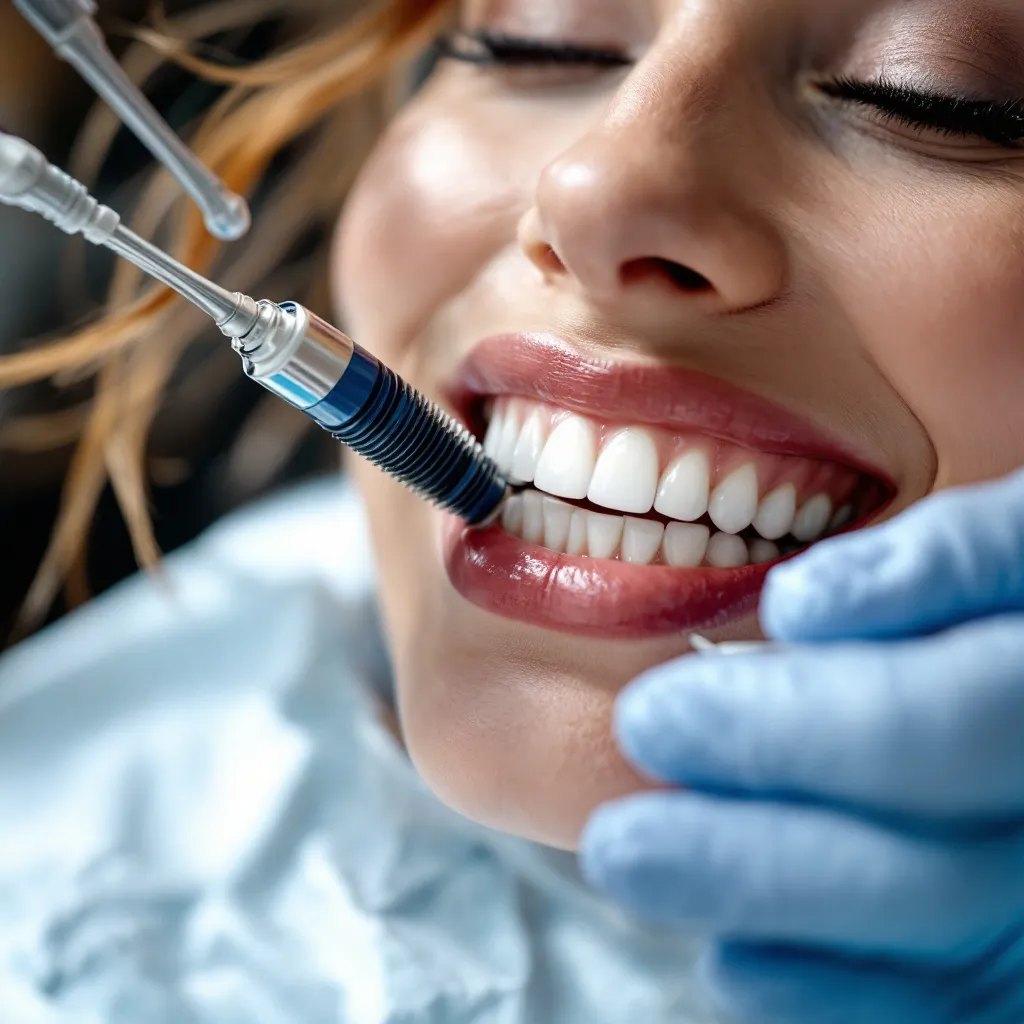
For most people who want a noticeable, lasting change in shade, professional whitening from a dentist is the stronger and more predictable choice, while over-the-counter products are a reasonable option for mild staining and modest goals. The difference comes down to the concentration of the active ingredient, how evenly it reaches the teeth, and whether a professional has first checked that whitening is appropriate for your mouth. Store-bought kits cost less and are convenient, but they work more slowly and less uniformly. Here is an honest look at how each approach performs.
Yes, within limits. Most whitening strips contain a low concentration of hydrogen peroxide or carbamide peroxide, commonly in the range of about 6 to 10 percent hydrogen peroxide equivalent. Used as directed, usually for 30 minutes once or twice a day over one to two weeks, they can lighten surface and mild intrinsic stains by a few shades. Studies and long-standing consumer experience support this, particularly for people whose discoloration comes from coffee, tea, or red wine.
The limits show up in the details. Strips are flat, while teeth are curved and often slightly crowded, so the gel does not always contact every surface. Spaces between teeth and the areas near the gumline tend to lighten less, which can leave a patchy or uneven result. Strips are also designed mainly for the front six to eight teeth, so back teeth that show when you smile broadly may stay darker.
Results also fade. Without maintenance, many people notice some of the brightness slipping back within several months, especially if they drink dark beverages or use tobacco. Strips are a legitimate tool, but they are best understood as a gentle, gradual option rather than a dramatic one, and they work best when expectations are realistic.
Professional whitening uses higher concentrations of peroxide than consumer products are permitted to offer. In-office treatments may use hydrogen peroxide in the range of 25 to 40 percent, while custom take-home trays typically use carbamide peroxide at around 10 to 22 percent. Because the chemistry is stronger, the gel breaks down stain molecules faster and penetrates deeper into the enamel, reaching discoloration that surface-level products only touch slowly.
Strength is only part of the story, because it is the control that makes it safe. A dentist protects the gums with a barrier or custom-fitted tray, monitors timing, and can adjust the plan if you feel sensitivity. Custom trays are molded to your teeth, so the gel sits evenly against every surface instead of leaking onto soft tissue. That precision is why professional results tend to look uniform and why higher concentrations can be used with less irritation.
A dental visit also means a proper evaluation first. Cavities, worn enamel, exposed roots, and gum recession can all make whitening painful or uneven if they go unaddressed. Crowns, veneers, and fillings do not change color with whitening, so a dentist can help you plan around them. Many patients in Boise find that this preparation prevents surprises, including mismatched restorations, and leads to a result that looks natural.
Over-the-counter products usually cost between roughly 20 and 80 dollars per kit, while professional treatments cost several hundred dollars depending on the method. On price alone, store-bought wins. But the comparison changes when you consider how many boxes it may take to reach the shade you want, and whether the outcome is satisfying enough that you stop buying them. Paying more once can sometimes be cheaper than repeated partial attempts.
Time is a clear difference. An in-office session typically takes about an hour to ninety minutes and can lighten teeth several shades in a single visit. Custom trays work over one to two weeks of short daily wear. Strips take a similar span but produce smaller changes. If you have an event, such as a wedding or a job interview, the predictability of professional treatment is a practical advantage.
Sensitivity affects both approaches. Peroxide can temporarily open tiny pathways in the enamel, causing zings of cold sensitivity that usually fade within a day or two. Stronger gel does not always mean more discomfort, because dentists can use desensitizing agents, shorter intervals, or lower-strength gel in custom trays. With over-the-counter kits, the burden of managing sensitivity falls on you, and overuse is the most common reason people end up with sore gums or teeth.
Absolutely. If your teeth are generally healthy and your stains are light, such as the yellowing that comes from a few years of coffee, a quality strip or low-strength tray kit can deliver a pleasing refresh at a modest price. They also suit people who simply want to maintain results after a professional treatment, using a touch-up kit once or twice a year to keep the shade steady without returning for a full session.
They are also a sensible way to test your tolerance. If you have never whitened before and are unsure how your teeth will respond, starting with a mild product lets you gauge sensitivity before committing to something stronger. Choose products that carry the American Dental Association Seal of Acceptance where possible, since that indicates safety and effectiveness have been reviewed, and follow the timing on the box without extending it.
Be cautious with products that make dramatic claims. Charcoal powders, acidic home remedies, and abrasive pastes can wear enamel, which actually makes teeth look yellower over time as the darker layer beneath shows through. LED lights sold with kits add little beyond the gel itself. If a product promises results that sound too fast or too large for its strength, it is worth skepticism.
Anyone with existing dental work, gum recession, frequent sensitivity, or a history of cavities should have an exam first. Whitening cannot lighten crowns or bonding, and applying gel to untreated decay can cause real discomfort. People with gray or brown discoloration from medications such as tetracycline, or from an old injury to a tooth, also tend to need a professional approach, because surface products rarely reach that kind of deep staining.
Local habits matter too. Boise residents who enjoy a morning coffee, craft beer, or a glass of red wine after a day on the Greenbelt are exposing their teeth to common stain sources, and those who smoke or vape face heavier staining. A dentist can recommend a maintenance routine that fits your lifestyle, including how often to touch up and which drinks to rinse after. Dry Idaho air can also contribute to dry mouth, which makes staining and sensitivity more noticeable.
If you are unsure where you fall, a short consultation is a low-risk way to find out. A dentist can show you your current shade, explain what is realistic, and tell you honestly whether a store-bought option would be enough. Sometimes the best advice is that you do not need anything stronger, and that kind of candor is worth having before you spend money in either direction.
Boise Smiles is a dental practice listed in Boise, Idaho. For professional help anywhere in Boise, visit teeth whitening.
☎Call (208) 658-0859 Boise Smiles