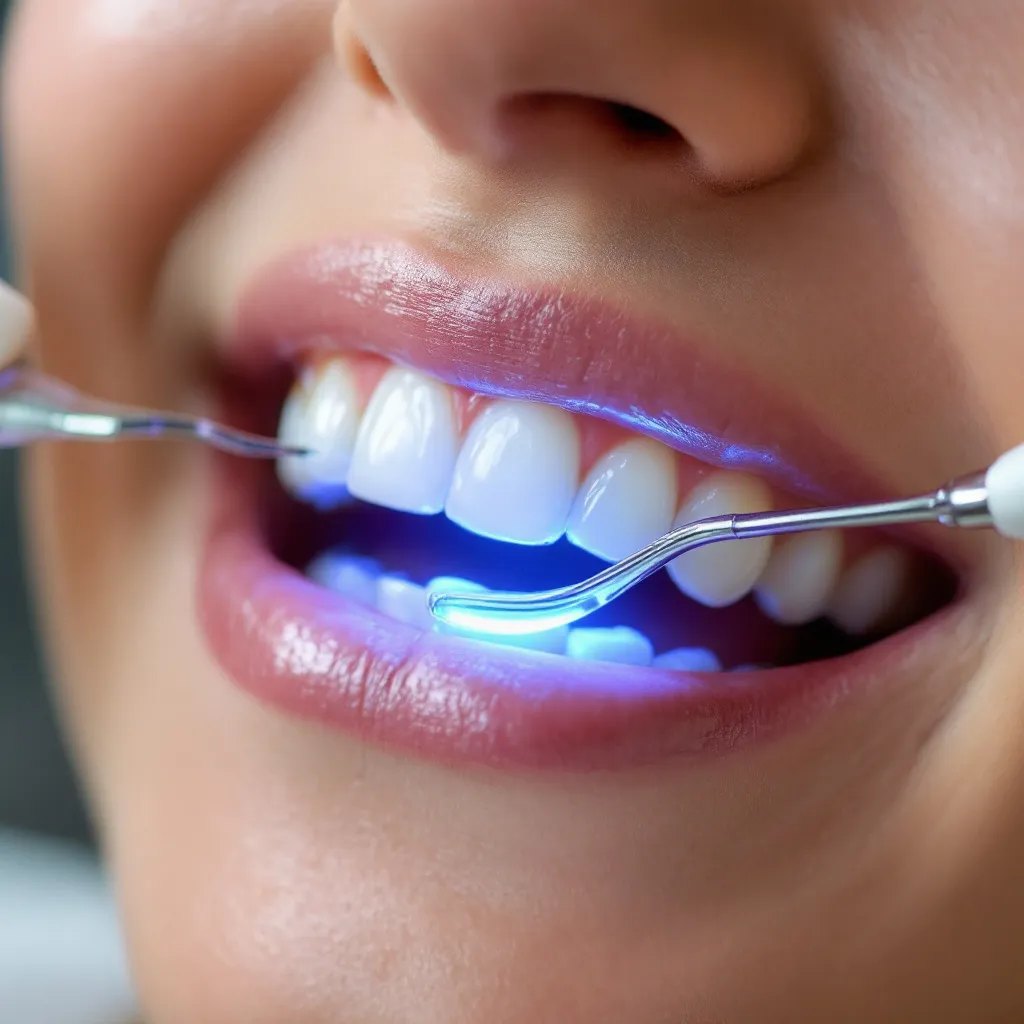
The right whitening method depends on how quickly you want results, how sensitive your teeth are, and how much daily effort you are willing to invest. In-office whitening delivers the most noticeable change in a single visit, usually about three to eight shades, because a dentist can apply a stronger gel under controlled conditions. Take-home whitening works more gradually, typically over one to two weeks, and costs less up front. It also gives you more control over pacing. Many Boise patients find that people with a deadline favor the office, while those with sensitivity or a tight budget lean toward custom trays at home.
In-office whitening uses a peroxide gel at a higher concentration, often in the range of 25 to 40 percent, applied after your gums are protected with a barrier or shield. Some practices add a curing light, though research on whether light meaningfully improves results is mixed. A single session of 45 to 90 minutes can lighten teeth several shades. The appeal is predictability: a professional monitors the process, adjusts timing, and stops if something feels wrong.
Take-home whitening, when done with custom-fitted trays from a dentist, uses a lower concentration, commonly 10 to 20 percent carbamide peroxide. Because the gel is weaker, it needs repeated use, usually thirty minutes to a few hours a day, or overnight for some formulas, across ten to fourteen days. The final shade can be comparable to an office treatment, but it arrives gradually rather than all at once. Compliance matters here; skipped days mean slower, less even progress.
It helps to be realistic about what any peroxide whitening can do. It lightens natural enamel and the stains within it, such as those from coffee, tea, red wine, and age. It does not change the color of crowns, veneers, bonding, or fillings. Gray or banded discoloration, sometimes caused by medication in childhood, may respond slowly. A dentist can examine your teeth first and tell you what shade change is plausible before you choose a method.
For most people with sensitive teeth, take-home whitening with custom trays is the gentler path. You can use a lower concentration, shorten wear time, or skip a day when your teeth feel tender. This flexibility lets you find a comfortable pace. Sensitivity from whitening is usually temporary, showing up as brief zings to cold air or drinks, and typically fades within a day or two after you stop or pause treatment.
In-office whitening is not off the table for sensitive patients, but it concentrates the exposure into one session. Some people tolerate it well, particularly when the dentist uses desensitizing agents, protective gels, or breaks the session into shorter intervals. Others find the intensity uncomfortable. If you have a history of sensitivity, mention it at the consultation so the dentist can plan accordingly rather than discovering the limit mid-treatment.
Several habits reduce discomfort with either method. Using toothpaste made for sensitive teeth for a couple of weeks beforehand can help, as can avoiding very cold drinks on treatment days. Boise winters bring dry, cold air that can aggravate exposed dentin, so a sip of icy water on a January morning may feel sharper than usual. Before any whitening, it is also worth treating cavities, cracks, or receding gums, since whitening gel can irritate these areas considerably.
Neither method is permanent, and the difference in longevity is smaller than most people expect. Results from either approach commonly last from several months to a couple of years, depending on diet, habits, and how well you maintain them. The underlying factor is that teeth continue to absorb pigment from food, drink, and tobacco over time. Starting from a whiter shade does not prevent that; it simply resets the baseline.
Take-home trays have a practical advantage for maintenance. Because you keep the custom trays, you can do a short touch-up session every few months for the cost of a small syringe of gel. Many patients who choose in-office whitening are also given trays afterward for exactly this reason. Using the two together, a dramatic first session followed by occasional home touch-ups, is a common and sensible combination.
Daily habits shape longevity more than the method. Heavy coffee, black tea, red wine, cola, and any form of tobacco will dull results faster. Rinsing with water after these drinks, using a straw where practical, and keeping up with regular cleanings help preserve brightness. Professional cleanings remove surface stain that builds between visits, which can make teeth look noticeably brighter even without additional whitening.
In-office whitening generally costs more per treatment, since you are paying for chair time and professional supervision. In exchange, you finish in one appointment, which suits people preparing for a wedding, a job interview, or a reunion. There is little to remember afterward beyond avoiding staining foods for a day or two. If your schedule is crowded, the efficiency can be worth the higher price.
Take-home whitening costs less initially, though custom trays add an upfront fee. Over time it can be the more economical choice, particularly if you plan to touch up regularly. The trade-off is daily commitment. You need to fit wear time into your routine for one to two weeks, and the results depend on consistency. People who enjoy a gradual, low-key process often prefer it.
Over-the-counter strips and kits sit at the budget end of the spectrum. They can produce modest improvement, but ill-fitting trays allow gel to leak onto gums, and the lower strength means slower, less even results. If you go that route, follow the directions closely and stop if gum irritation develops. A dentist-supervised option generally offers better fit, better safety, and more reliable outcomes for the money.
Start with a dental exam. A dentist can confirm that your teeth and gums are healthy enough for whitening, identify restorations that will not change color, and discuss the type of staining you have. Whitening over untreated decay or gum disease is uncomfortable and can make problems worse, so addressing those issues first is the responsible order of operations.
Then weigh three factors: timeline, sensitivity, and budget. If you need visible change quickly and your teeth tolerate treatment well, in-office whitening is a strong fit. If you are sensitive, prefer to go slowly, or want an ongoing maintenance option, custom take-home trays make more sense. If you want both speed and long-term upkeep, a combined approach is often the most practical.
Finally, consider how you live. Someone who drinks several cups of coffee a day and is likely to relapse into staining may benefit from having trays at home. Someone who dislikes routine may prefer a single appointment and a longer gap before the next treatment. At Boise Smiles, the goal of a consultation is to match the method to your teeth and your lifestyle, rather than to push a single option.
Boise Smiles is a dental practice listed in Boise, Idaho. For professional help anywhere in Boise, visit teeth whitening services.
☎Call (208) 658-0859 Boise Smiles