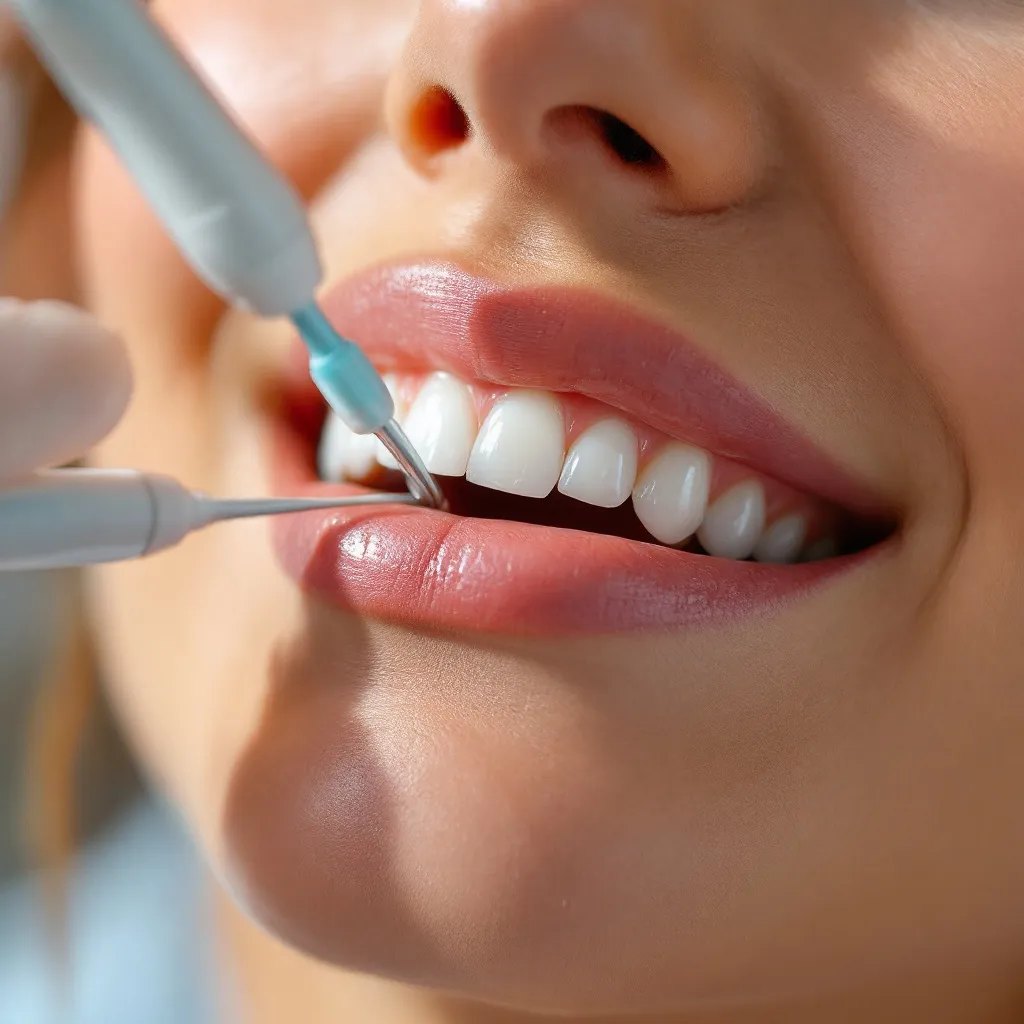
Teeth whitening works on natural tooth structure, but it does not work on crowns, veneers, or most fillings. Porcelain, ceramic, and composite resin lack the porous organic structure that whitening gels act upon, so they keep their original shade while surrounding enamel lightens. That can leave a visible mismatch, especially in the front of the mouth. The good news is that the problem is predictable and manageable with planning. If you have dental work that shows when you smile, the order of steps matters as much as the whitening product you choose.
In almost every case, no. Whitening gels rely on peroxide compounds that break down stain molecules, known as chromogens, within and on the surface of natural enamel and dentin. Porcelain crowns and veneers are made of dense, glazed ceramic with no such stain pathways, and composite fillings are a resin matrix with fillers. The peroxide passes over them without lightening the material, so they stay the shade they were on the day they were placed.
The practical result is that whitening changes only one side of the comparison. If your front teeth were a close match to a crown a few years ago, lightening the natural teeth by two or three shades can make that crown look suddenly dark or gray by contrast. Patients are often surprised because nothing about the crown changed; the teeth around it did.
There is also a small caution about the edges. Where a restoration meets the tooth, tiny gaps or worn margins can let gel reach underlying dentin, which occasionally causes sensitivity near the restoration. Older fillings with leaking margins are the most common culprits. A brief exam before whitening lets a dentist spot those weak points and repair them first, so the treatment is more comfortable and the results are more even.
Natural enamel is a crystalline mineral structure with microscopic spaces. Coffee, tea, red wine, and tobacco leave pigments in and on those spaces, and whitening agents penetrate and oxidize them. This is the process described in general references as the chemical degradation of chromogens, and it is why the effect is real on natural teeth. Restorative materials simply do not offer the same environment for the reaction to occur.
Porcelain is the most stable. A well-glazed crown or veneer resists staining and also resists bleaching, so its color is essentially fixed. Composite resin is slightly different: it can pick up surface stain over time and may look a little duller than it once did, yet whitening gel will not reliably bring it back. Polishing can sometimes remove surface discoloration from composite, which is a gentler option than replacement.
Metal fillings and metal-based crowns are not affected at all, though whitening around them is generally safe. The main point is that the material determines the outcome. Knowing what each of your restorations is made from, which your dental records will show, helps you predict how a whitening plan will look before you start.
Start by waiting. Whitening results usually settle over one to two weeks, and teeth can look temporarily lighter right after treatment because of dehydration. Judge the match after the shade stabilizes, in natural daylight rather than bathroom lighting. If the crown still looks noticeably darker, you have a few reasonable options rather than a single fix.
For a mild difference in a composite filling or bonding, a dentist may be able to polish or resurface the material, or replace it with a lighter shade. For a porcelain crown or veneer, the shade cannot be adjusted, so replacement is the dependable route. A new restoration is made to match your whitened teeth, using a shade chosen after your color has stabilized. Some patients also choose to whiten a little less, stopping at a level that keeps the natural teeth in harmony with an existing crown.
If budget or timing is a concern, it is worth asking whether only the visible restoration needs attention. A crown on a back molar rarely shows when you smile, so a mismatch there may not justify replacement. A front-tooth crown or veneer is a different story. Prioritizing by visibility keeps costs sensible and avoids replacing work that is still functioning well.
Yes, in nearly all cases whitening should come first. A new crown, veneer, or filling is matched to the teeth beside it. If you replace it before whitening, the shade is chosen against your current, darker teeth, and whitening afterward would leave the new restoration looking too dark all over again. Whitening first lets the dentist or ceramist match the final, brighter shade.
Timing matters too. Most dentists suggest waiting about one to two weeks after whitening before shade matching or bonding, because peroxide can temporarily weaken the bond strength of adhesives and affect how color is perceived. Rushing into a restoration appointment the day after whitening can lead to a shade that looks right in the chair and wrong a week later.
In practice, a typical sequence looks like this: an exam and cleaning, repair of any decay or leaking fillings, a whitening course, a pause for the color to settle, and then shade selection for the new restoration. Planning this way may stretch the process over several weeks, but it greatly improves the odds that the finished result looks natural and requires no redo.
Begin with a conversation about what you have in your mouth and what you want to change. Bring any records of past crowns, veneers, or bonding, or ask your dentist to note them during the exam. At Boise Smiles, the useful questions are which teeth show when you smile, how old the restorations are, and how much lighter you want to go. Those answers shape the whole plan.
Local habits can also influence results. Many Boise residents drink coffee on the way to work, enjoy craft beer and red wine, or spend long days outdoors, and those routines contribute to extrinsic stain that whitening handles well. Cleaning before whitening removes surface buildup so the gel works evenly, and cutting back on dark beverages for the first several days helps results hold.
Finally, set realistic expectations. Whitening can lift natural teeth noticeably, but it will not make every tooth identical when restorations are involved. Treat it as one part of a sequence: natural teeth are lightened first, then any restoration that no longer blends is updated. Patients who approach it this way generally end up with a more consistent smile and fewer surprises.
For a broader background on how bleaching lightens enamel by breaking down stain-causing chromogens, see this overview of tooth whitening from Wikipedia, the free encyclopedia.
Boise Smiles is a dental practice listed in Boise, Idaho. For professional help anywhere in Boise, visit teeth whitening.
☎Call (208) 658-0859 Boise Smiles